An unknown Cape Verdean goalkeeper, beer-loving Scotland fans, and hydration breaks have all captured the media’s attention during the opening group stages of the 2026 World Cup. For PR and communications teams, these stories offer a glimpse into how brand narratives travel and land in the age of real-time social media and rapid news cycles.
Lionel Messi is still winning the player narrative
The GOAT debate between Lionel Messi and Cristiano Ronaldo has raged for two decades. This World Cup, Messi is settling it on the pitch and in the media. With six goals in the opening group round, the Argentina star has generated the most media coverage of any player at the World Cup.
Messi has earned more than 52,000 media mentions (online, print, TV, radio, and podcasts outlets) putting him ahead of Ronaldo and France’s Kylian Mpabbé. There are breakout stories from the tournament, too. Norway’s Erling Haaland’s goals have made an impact, while Folarin Balogun saw his Nike jersey quickly sell out after a match-winning performance for the USA.
However, one of the stars of the early rounds was Cape Verde’s Vozinha. The 40-year-old goalkeeper made headlines after a man of the match performance against Spain in his country’s first ever World Cup game. Vozinha, a little-known player competing in the second tier of Portugal’s football league, has seen his Instagram following rise from 50,000 to 17.5 million in two weeks.
Vozinha and Cabo Verde making history 🇨🇻#FIFAWorldCup pic.twitter.com/TIEc3lh2GO
— FIFA World Cup (@FIFAWorldCup) June 15, 2026
Share of voice data from CisionOne shows that traditional media still favors established names. The gap between Messi and Ronaldo’s coverage and everyone else's illustrates the power of legacy and accumulated reputation. However, Vozinha has demonstrated the speed with which a single performance can create a new media narrative in the blink of an eye.
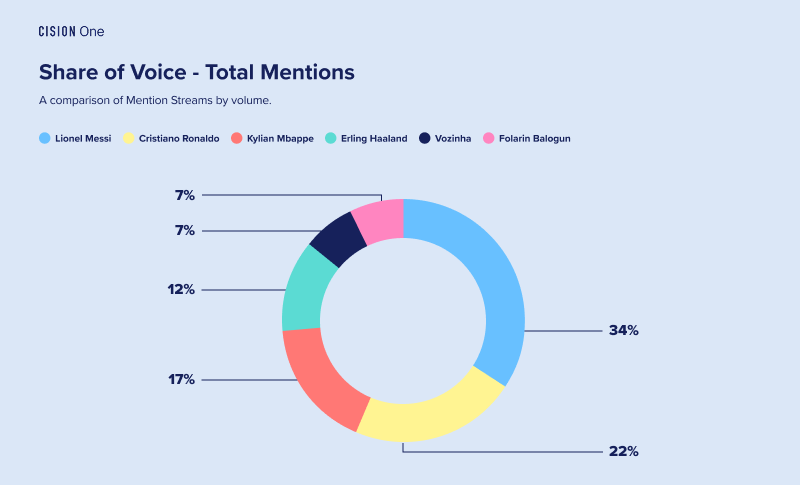
Why this matters for PR: Much like it applies to brands, share of voice can apply to athletes, ambassadors, C-suite executives, and spokespeople. Messi and Ronaldo are the equivalent of resilient and established legacy brands, while Haaland and Vozinha are challengers in the market. If your campaign depends on a specific person’s profile, monitoring coverage in real time can tell you why they’re being discussed and help you pinpoint when to amplify or pivot messaging.
Hydration break backlash highlights brand reputation risk
FIFA-mandated hydration breaks have sparked backlash from fans, with boos ringing out in stadiums and negative social conversations spilling into traditional media coverage. This has raised questions about the game being Americanized by splitting into four quarters. Fans have also bristled at the idea of some broadcasters using the breaks for commercials.
France coach Didier Deschamp’s, Uruguay’s Marcelo Bielsa, and England’s Thomas Tuchel have publicly criticized the hydration breaks, giving the story additional legs in the media.
Powerade, the Coca-Cola-owned official sports drink of FIFA, became collateral damage as its branding ran alongside the breaks in play. In fact, as media mentions for hydration breaks peaked, Coca-Cola's stock price dipped before recovering as coverage tailed off.
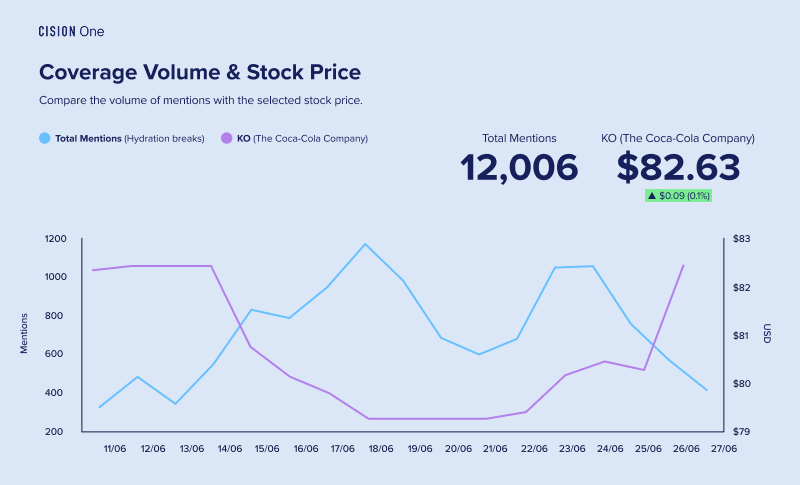
Fan sentiment and media coverage likely contributed to Coca-Cola's stock fall, but there’s nuance in just how damaging it’s been to Powerade. Richard Powers, associate professor at the Rotman School of Management at the University of Toronto, told the Toronto Star that fan frustration was directed mainly at FIFA rather than Powerade.
Why this matters for PR: When a brand partnership activation generates negativity, the question should never just be "is our brand being mentioned?" but "where is the anger being directed?" Though Coca-Cola took a temporary hit, it emerged from the hydration break debate relatively unscathed. Brands are constantly faced with reputational risks, but not all of them turn into a full-blown crisis (or need intervention).
The Scottish Tartan Army’s love affair with Boston
Scotland exited the World Cup early after defeats to Morocco and Brazil, but their 20,000-strong Tartan Army left an indelible mark on Boston. Scotland fans created some of the tournament’s most sustained coverage, tripling St. Patrick’s Day demand at Hennessy’s Bar and causing a temporary shortage of Sam Adams Boston Lager.
The Boston Globe ran a full-page tribute to the visiting fans, and Mayor Michelle Wu signed a letter of intent to establish a sister-city relationship with Glasgow.
In today’s @BostonGlobe pic.twitter.com/AVejWDgIsO
— Ben Volin (@BenVolin) June 20, 2026
Other fan groups have made an impression across host cities. Notably, Norway’s Viking Row on the New York City subway and Dutch supporters’ Oranje Fanwalk through Houston. Sentiment in media coverage around each of these fan groups has been overwhelmingly positive, with Scotland’s fans generating more than 5,000 World Cup-related stories.
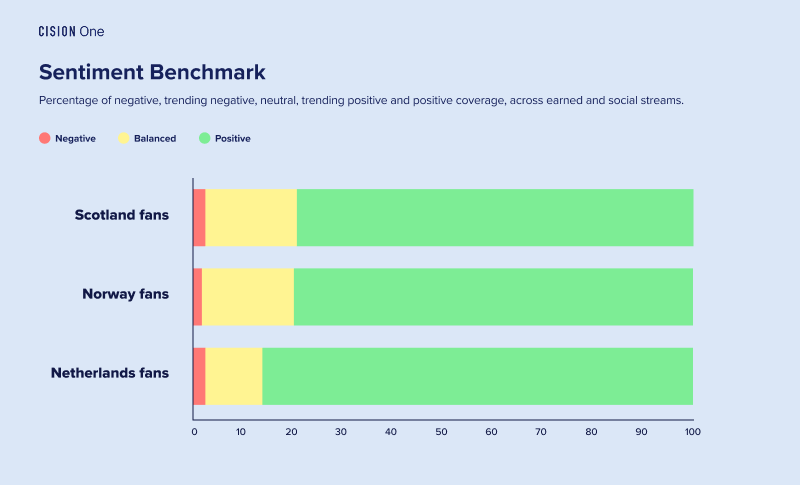
Why this matters for PR: Scotland’s Tartan Army fans have a defined visual identity, consistent behaviours, and a reputation for creating goodwill wherever they travel. They have a clear brand image, and their World Cup adventure shows how the media will gravitate toward groups, communities, and institutions with a strong, coherent story to tell. If you know your brand and its story, that makes it easier for the media to relay it.
Visiting fans embrace ranch dressing
Overseas fans’ love of ranch dressing has become one of the World Cup's unlikeliest off-pitch stories, as social media users post about their first encounters with the condiment. Descriptions have ranged from calling the popular salad dressing a "sacred rite" and "like crack."
The viral trend snowballed on social media. The TSA took part on Instagram, telling fans to “please avoid chugging ranch outside security,” while Kraft announced a TSA-compliant travel pack and the UPS Store launched a "Ship and Dip" promotion.
If you’re visiting for a very large sporting event & you happen to discover RANCH while you’re here… pls pack it in your CHECKED BAG on the way home.
— TSA (@TSA) June 18, 2026
Thank you.
Media coverage from CNN, The Washington Post, NBC News, and USA Today boosted the product’s profile further – and Hidden Valley capitalized by handing out ranch seasoning mix packets at host cities.
Across online and podcast media, ranch dressing earned more than 23,800 mentions in June 2026, a rise of 113% when compared to June 2025 – a clear example of the World Cup effect for ranch dressing.
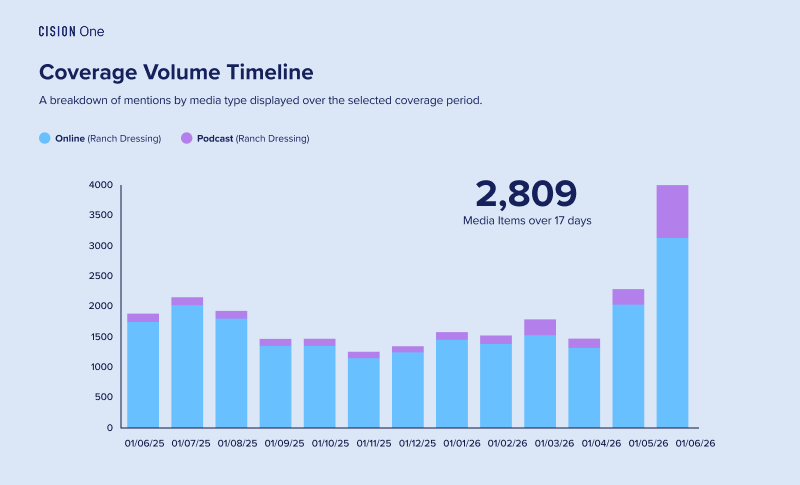
Why this matters for PR: The ranch dressing media story is an example of reactive brand PR done well. By monitoring media and social conversation in real time, Hidden Valley and Kraft were able to surface an organic cultural moment quickly – then decide when and how to participate as the story peaked.
The bottom line
From Lionel Messi's enduring star power to ranch dressing becoming an unlikely cultural phenomenon, the World Cup stories that have resonated are often those that capture emotion, identity, and the conversations beyond what’s happening on the pitch.
By understanding the narratives driving stories, where sentiment is directed, and when and where a story gains traction, it’s easier for PR teams to spot opportunities and leverage a global event to gain earned media coverage (even if they don’t have the budget for sponsorship fees). This kind of media intelligence can be surfaced through CisionOne, which brings together media monitoring, social listening, and media outreach in one place.
Want to see what’s capturing attention right now? Check out the Football Attention Index – a live analysis of social and traditional media conversations, powered by Brandwatch Consumer Research. See which brands are getting the most mentions, the topics driving discussions, the host cities generating the most buzz, and more.
For more brand stories from the 2026 World Cup, sign up for Football Insights Weekly.
Methodology: CisionOne measurements cover mentions from online, print, TV, radio, and podcast media. Dated from June 11, 2026 - June 27, 20026 – the opening group stage of the World Cup, to provide a snapshot of the tournament’s early media narratives – and June 2025 to June 2026 to show monthly mentions for ranch dressing.

.png)